How Wallpapers Can Make Small Spaces Look Bigger
Wallpaper That Expands Your World.
When you live in a compact home, every inch matters. The right wallpaper doesn’t just decorate your walls—it transforms how you feel inside the room. Clever use of colors, patterns, and textures can create illusions of height, depth, and openness that make even the coziest corner feel inviting and spacious.
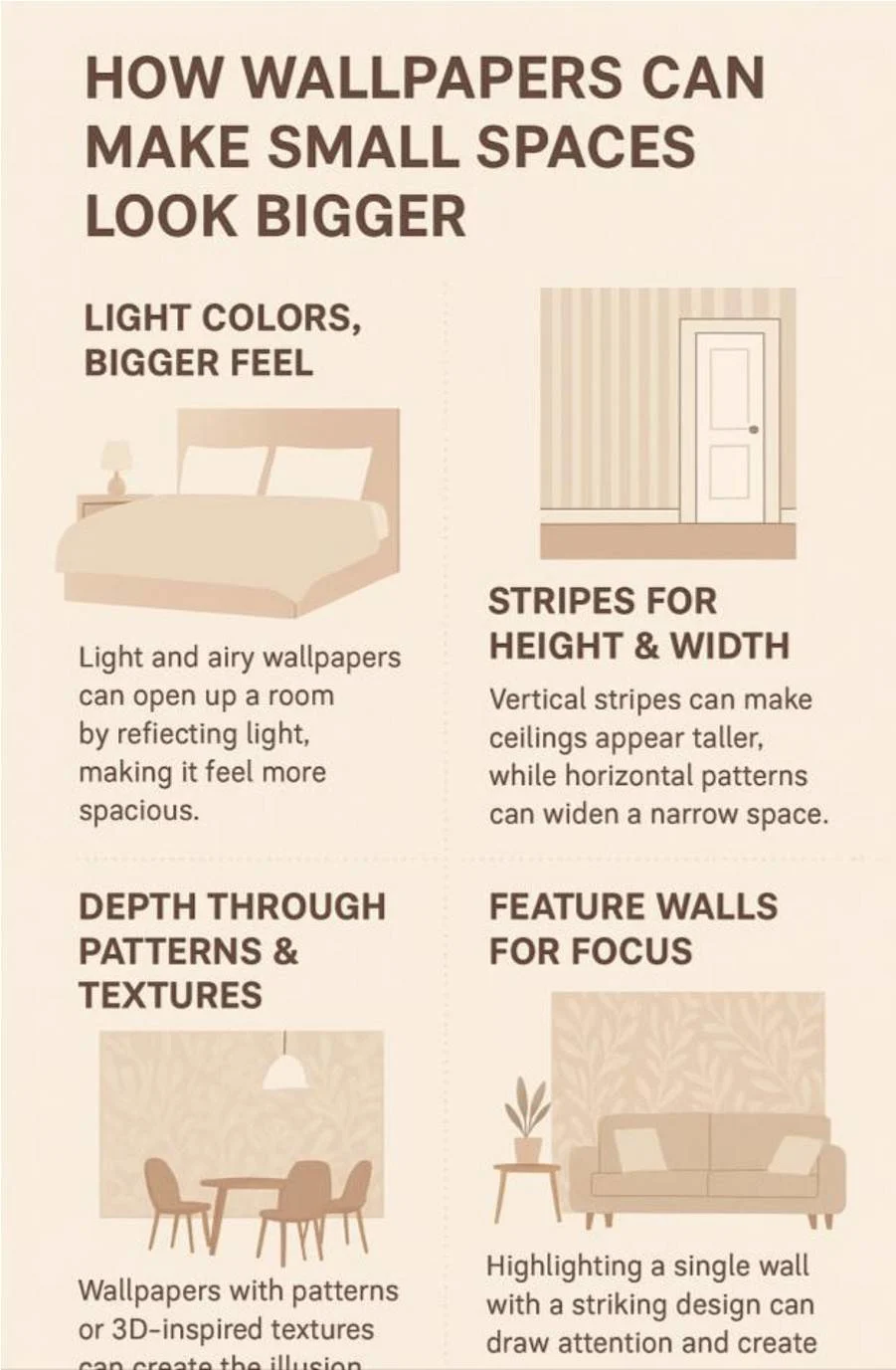
Light Colors, Bigger Feel
Color sets the mood of a room, and in small spaces, lighter shades work wonders. Wallpapers in whites, creams, soft pastels, or muted neutrals reflect both natural and artificial light. This reflection brightens the space, giving it an airy, uncluttered feel. Unlike heavy dark tones that absorb light, light-colored wallpapers open up the room visually, making it seem larger than it really is. Imagine a tiny bedroom that suddenly feels calm, breathable, and twice its size—simply because of the wallpaper shade.
Stripes for Height & Width
Patterns can change proportions. Vertical stripes are a timeless trick to make ceilings appear taller. They naturally guide the eye upward, adding a sense of grandeur to cramped spaces. On the other hand, horizontal stripes stretch the room sideways, making narrow areas like hallways or kitchens feel broader. With just the right stripe direction, your wallpaper can quietly reshape the architecture of your space without a single renovation.
Depth Through Patterns & Textures
Wallpapers with repeating motifs, botanicals, or even subtle 3D-inspired designs create an illusion of depth. The eye perceives these layers as more “space,” giving a flat wall an added dimension. Florals, geometric patterns, or natural textures like stone and wood grains can make a wall feel like it extends further back. It’s a visual trick that works beautifully in small dining rooms or study corners, where coziness meets openness.
Feature Walls for Focus
A bold feature wall can completely shift how you perceive a room. Instead of noticing the limited dimensions, your eyes are drawn to the statement wall—whether it’s a striking mural, textured wallpaper, or vibrant pattern. This technique doesn’t just expand space visually, it also adds personality, making the room feel intentional, stylish, and designed with care. A feature wall behind a sofa, dining table, or bed can give the illusion of depth and sophistication without overwhelming the entire room.
Final Word: Small Space, Big Style
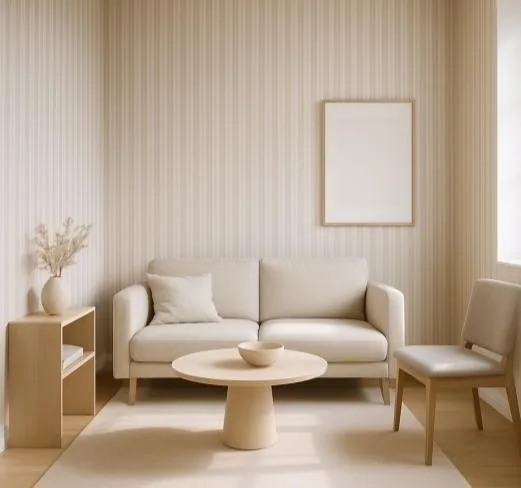
Style That Stretches Beyond Walls.
Small spaces don’t have to feel small. With Ellendorf wallpapers, your home can feel more open, breathable, and vibrant—without a single wall being moved. Whether it’s through light-reflecting shades, clever stripes, depth-adding textures, or a bold feature wall, the right wallpaper brings out the beauty of even the tiniest rooms.